Parging Services in Denver, CO
Parging is one of those masonry services most homeowners don't know they need until the damage is hard to miss. A thin coat of mortar applied to the surface of foundation walls, concrete block, or rough masonry, parging seals, smooths, and protects surfaces that would otherwise absorb moisture, crack, and deteriorate. When it fails, you'll see it: flaking, crumbling, staining, moisture intrusion, and eventually structural compromise.
At Denver Brick Specialists, we've been applying and restoring parging across the Denver metro since 1965. We understand how Denver's freeze-thaw cycles stress exterior masonry surfaces, and we mix and apply parging mortars built to handle Colorado's climate.
What Is Parging?
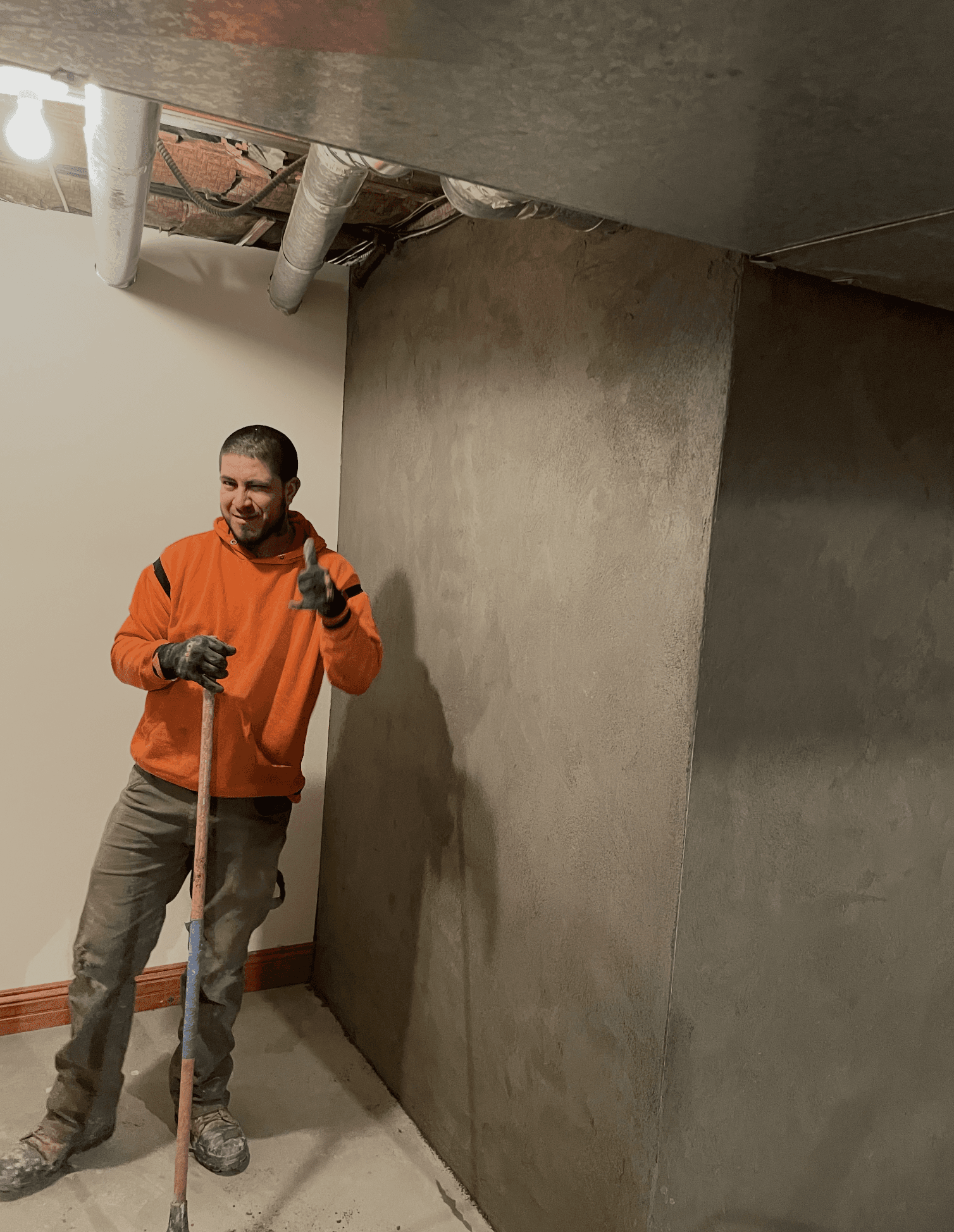
Parging is a coat, typically 3/8" to 3/4" thick, of cementitious mortar applied over a masonry or concrete surface. Its primary purpose is protective, not decorative. It performs several functions at once:
Waterproofing. Prevents water from penetrating into block cells, stone joints, or porous concrete, critical in Denver's wet springs and freeze-prone winters.
Smoothing. Covers irregular surfaces, exposed aggregate, honeycombing in concrete, and rough block courses.
Protecting. Slows carbonation, reduces spalling, and extends the service life of the underlying masonry.
Sealing. Covers gaps, voids, and imperfections that allow pest intrusion and moisture migration.
Parging is most commonly applied to foundation walls (above and below grade), concrete block (CMU) walls, crawl space walls, exterior basement walls, stone foundations on older homes, and retaining walls.
Signs Your Parging Needs Repair or Replacement
Flaking or delamination. The parge coat is peeling away in sheets or patches.
Cracking. Vertical, horizontal, or map-crack (crazing) patterns across the surface.
Staining or efflorescence. White salt deposits indicate water is moving through the substrate.
Bulging or hollow spots. A hollow sound when tapped means the coat has separated from the substrate.
Moisture in the basement or crawl space. Failing parging is often part of the cause.
Our Parging Process
1. Surface Evaluation. We inspect the existing parge coat and the substrate beneath. We check for active moisture intrusion, structural cracks, failed mortar in block joints, and anything that needs addressing before new material goes on.
2. Removal of Failed Parging. Where parging has delaminated or lost adhesion, we remove it completely. Spot repairs over a failed substrate don't hold.
3. Substrate Preparation. We repair underlying masonry issues first, repointing block joints, sealing active cracks, treating moisture problems. Parging over problems hides them temporarily and fails quickly.
4. Mortar Mix Selection. We mix our own parging mortar to match the conditions of the project. In Denver, that means accounting for freeze-thaw cycling, drainage conditions, and whether the surface is above or below grade.
5. Application. Applied in one or two coats depending on required thickness, with proper technique to ensure adhesion and eliminate voids.
6. Curing and Finishing. A parge coat that dries too fast in summer heat or freezes before it sets is wasted work. We protect the surface through the curing window.
Parging and Denver's Climate
Denver averages over 300 days of sunshine, which means dramatic daily temperature swings. In winter, temperatures can rise from below freezing to 60°F within hours, then drop again overnight. That thermal cycling is brutal on parge coats. Add seasonal moisture events — spring rain, wet snow, drainage from surrounding soil — and you have a demanding environment that most generic parging mortars aren't matched to.
We've been watching parging perform and fail in Denver since 1965. We mix and apply accordingly.
Parging for Historic Denver Homes
Many of Denver's older homes in neighborhoods like Whittier, Curtis Park, West Colfax, and Sunnyside have stone or brick foundations with parge coats that are decades old. In many cases the original parging was lime-based: softer, more breathable, and more compatible with the original masonry than modern Portland-based mixes.
Repointing or re-parging these walls with a too-hard, too-dense mortar can trap moisture in the wall, leading to spalling stone or brick and accelerated deterioration. If your home was built before 1950 and has original foundation parging that needs attention, the mix selection matters. We'll tell you what's appropriate for your specific construction.
Frequently Asked Questions
How long does parging last? A properly applied parge coat on a sound substrate in Denver conditions should last 15 to 25 years or more. How long it actually lasts depends on mix quality, drainage conditions, and whether the underlying masonry holds up.
Can parging be painted? Yes. Once fully cured, a parge coat can be painted with a masonry-appropriate paint. Allow at least 28 days of cure time and use a breathable masonry paint rather than a film-forming coating that can trap moisture.
Is parging the same as stucco? Similar but not the same. Stucco is a multi-coat finish system with a decorative texture. Parging is a utilitarian single protective coat. Some stucco systems incorporate a parge base coat.
My foundation parging is cracking. is that a structural problem? Not necessarily. Surface parging cracks from mortar shrinkage, thermal cycling, and moisture, independently of the structure beneath. When we evaluate your parging, we'll tell you what we see in the substrate and flag anything that warrants further attention.
Do you repair parging or only do full replacements? Both. If the existing coat is mostly sound and damage is limited, we repair sections and integrate them cleanly. If parging has failed extensively, a full removal and re-parging is the right call. We'll give you an honest read on which situation you have.